10 Jun 2014

Trade Union Website League Table 2014


Every June I look at a number of key industry metrics to see how the TUC affiliated unions’ websites rank against each other. The results are compiled in a trade union website league table, and the 2014 version is now complete. The full league table can be seen below and last years' results are here: trade union website league table 2013. This league table isn't an attempt to judge the content, design or functionality of each site. Instead, it reflects how often a website is mentioned and linked to on other websites. To do this, I use leading metrics such as Domain Authority and Google

11 Apr 2014

Thunderclap: create a social media storm


Have you ever wanted to get a message across loudly on Twitter or Facebook? Thunderclap is an online tool aimed at activists that can help do just that. It pitches itself as a ‘crowdspeaking’ platform, in a similar vein to ‘crowdfunding’ websites like Kickstarter. Successful campaigns result in the same message being broadcast at the same time across the multiple Facebook and Twitter accounts of the campaign subscribers. It’s being used by a range of people, from activists to companies and even the White House. Unions are starting to use it as well. The Communication Workers Union (CWU) has
21 Nov 2013

Which unions are the most influential in social media in 2013?


In 2012 I carried out some research to see which TUC affiliated unions are the most influential in social media. I published the results on my website in a league table. It’s been a year since that first survey, so I've updated the results to see how things have changed, enabling unions to measure their progress over the past year. It’s difficult to measure social media influence. Twitter is arguably the key social media platform for unions, and also the most open for analysis, so this research is based on Twitter alone. There are two main services for measuring the influence of a Twitter
15 Oct 2013

Which union websites work well on smartphones, tablets and widescreens?


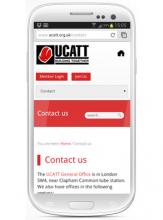
I recently developed a new website for UCATT, the union for construction workers. Most of their members do not work at a desktop PC - so it was vital for the website to display well on smartphones. This is increasingly required for all websites, not just union sites. The biggest single change to website design over the last couple of years is driven by the increasing variety of screen sizes used to access them. Five years ago it was simple. A website would be designed to perform well at a fixed size that fitted well with the average desktop screen of the day. Now, people are using smartphones
28 Aug 2013

The Climbing Frame App


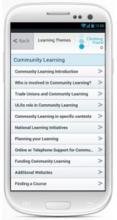
A new addition to the world of trade union Apps has just been released. TUC unionlearn’s popular Climbing Frame website, an online service primarily aimed at Union Learning Reps, has been launched as an App. The App is another way of accessing the same information as on the website, allowing Union Learning Reps and other learner managers to access learning content and manage the progress of learners. The Climbing Frame is a long established tool, created by the TUC’s learning and skills organisation unionlearn. It’s most recent form - that of a website-based service - has proved popular with
02 Jul 2013

Trade Union Website League Table 2013


It's been a year since I created the first trade union website league table, and so I've updated it below for 2013. I provide search engine optimisation services regularly to the private sector. However, I also do a lot of consultancy work with unions and I feel search engine optimisation is an overlooked area where unions can win influence by being more visible online. I've written about my feeling on this before, and this table is an attempt to highlight the importance of search engine optimisation to unions. The league table reflects how important the websites are considered to be by search
13 Mar 2013

Union apps


With a large increase in the number of people using mobile computer devices like smartphones and tablets, unions are increasingly looking at the opportunities presented by developing their own apps. [Please note, as many of these apps have now been closed, the links to the App Stores have been removed from this blog.] This is something I'm seeing firsthand as I've been working more and more on apps recently, with the launch of Prospect's new Apprenticeship App and a new app project underway with Unionlearn. While the increase in mobile devices has led to significant growth in the number of
11 Mar 2013

Apprenticeship jobs & guide app


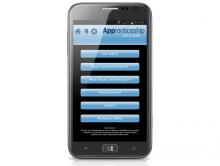
I’ve recently been working with Prospect and Unionlearn to develop an app aimed at people doing or considering doing an apprenticeship. It's just been officially launched to coincide with National Apprenticeship Week 2013 (March 11th to 15th). It’s available on Android smartphones and tablets, and the iPhone/iPad. The objective was to create an app that apprentices and would-be-apprentices would find useful and want to download, but also to give advice about their rights at work (such as health and safety, minimum rates of pay and what should be covered in an apprenticeship contract). Our
27 Nov 2012

Which Unions are the most influential on social media in 2012?


Following on from the league table of trade union websites I produced earlier this year, I thought I’d look at who the most influential trade unions are in social media. It’s difficult to measure reputation on the Internet. However, with the increasing importance of social media – including retweets, likes, +1s, replies, and follower counts – the organisations I work with and advise are increasingly keen to keep score and compare themselves with their rivals, be they private sector or non profits. Social media influence is critical to unions as well as companies, and the unions I’ve worked
22 Oct 2012

What are the most popular union hashtags?


People who use Twitter will be very familiar with hashtags. A Twitter hashtag ties the conversations of different users into one stream, which you can then find by searching for the hashtag in Twitter. For example, searching for the hashtag #union in Twitter brings up the latest Tweets related to trade unions. Television, radio, magazines and websites all use Twitter hastags to encourage audience participation, and so people who are not on Twitter are increasingly being exposed to hashtags. Twitter is very popular in the union movement and union activists have even used hashtags to campaign