28 Feb 2018

How do visitors access your website?


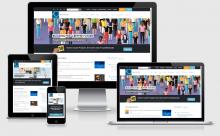
In a relatively short period of time, smartphones and tablets have completely changed the way we access the web. Long gone is the assumption that each user has a desktop PC. It’s hard to imagine a world now where people don’t spend time glued to the smaller screens of their phones or tablets. While responsive website design now allows the same site to adapt to the different devices, it’s always useful to know how users are accessing a website. Greater prioritisation can be given to the various design elements if we know that, for example, the site is being heavily used by smartphone users or

31 Jan 2018

Why redirects are so important in website redesigns


When websites are redesigned or restructured, one mistake I come across a surprising amount of the time is a failure to use redirects properly. I’ve recently seen this happen on a large, authoritative website for a public sector body. Why are redirects important? Well, when a website changes the address of content or a resource, often as a result of a redesign, then existing links to those resources from other websites, search engines, and social media platforms, will break – unless a redirect is put in place. For example, a webpage address may change from: www.examples.guide/important
08 Sep 2017

How big is your union website in 2017?


A couple of years ago, I looked at the sizes of the websites of all the TUC affiliated unions, to see how they compared. I’ve found myself coming back to this analysis quite often. Various unions have wanted an idea of how large their website is compared to others, or have wanted to judge how their website has changed since a redesign. As a result, I thought it would be useful to update these metrics. For the sake of this comparison, only pages publically indexed in Google are included. It is impossible to include members’ only pages, so please be aware of this limitation. Also, some pages may
14 Jun 2017

The rise of the semantic web


If ten years ago you were asked what the next major trend in website design would be, not many people would have mentioned ‘responsive design’. With the iPhone yet to be launched and the iPad another three years away, people were still happily building websites that worked on a fixed size. It took quite a few years for website development companies to start adopting the practice of making websites that automatically adjusted to the screen size, a now well-established technique called responsive design. Throughout that time, I saw some organisations spend large sums on websites that missed this
12 May 2017

Careersmart 2.0


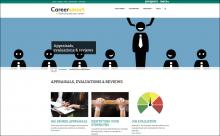
Back in 2014, Prospect launched the Careersmart.org.uk website, providing information and guidance on careers and work issues from a union perspective. The site has recently undergone a major revision, with the new version launched at the end of April 2017. I’ve been leading on the redevelopment. The main focus of the redevelopment has been tapping into a new government big data source called ‘ LMI (Labour Market Information) for All’. This online data portal connects and standardises existing data sources, such as the Annual Survey of Hours and Earnings (ASHE) and the Labour Force Survey (LFS
16 Nov 2016

Diversity Project website now live


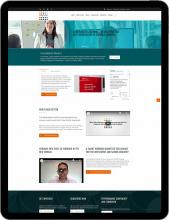
I’ve been working on a website for a new initiative, designed to encourage greater diversity and inclusion in the investment and savings industry. The site has recently gone live, and can be seen at http://diversityproject.com. The project started after a group of leaders in the investment industry got together in early 2016 and decided to take action to accelerate progress towards a more representative workforce in the sector. One of the driving forces behind it is the Helena Morrissey, the Chair of the Investment Association and former CEO of Newton Investment Management. She also set-up the
15 Jul 2016

TUC Communication Awards 2016


It’s the time of year when the TUC give out their awards for the best use of communications amongst unions. I’m always interested in the digital categories to see how unions are developing their websites and other tools. There is one big change this year. Previously there were two digital categories – best website and best e-communications. This year, they have been merged into one: ‘best membership communication – digital’. I think this is a shame. It reduces the proportion of the awards focused on digital at a time when unions should be encouraged as much as possible to grasp the inevitable
24 Jun 2016

New Prospect website


One of the latest projects I’ve been involved with has recently gone live: Prospect, the professional’s union, has just launched their new website. I’ve been helping with the website's new mobile and tablet friendly design, but also with some major changes to the information architecture. The new design is responsive, a design approach that allows the template to change depending on the screen size being used to view the website. This means that users viewing on tablets or browsers see a slightly different layout than those on desktops, avoiding the need to zoom in and out to read the content
10 Jun 2016

What is link baiting?


If you want to attract more visitors to your website, then one effective approach is “link baiting”. This is where a website features content that is so compelling that people want to link to it through their own websites or social media accounts. This not only increases your visitor potential, but also boosts your website's overall performance in search engines, as sites receiving more links are ranked higher in search engines like Google. Blogging is a great platform for this. I've recently been working on the new FBU and Prospect websites, and we've made blogging far more prominent in both
24 Feb 2016

PHP 7 and the improvements to PHP 5


PHP is a website programming language. It’s the World Wide Web's most popular code, estimated to power over 80% of websites, including the likes of Facebook and Wikipedia. In December 2015, a major new version of PHP was released: PHP 7. PHP 7 is the first major upgrade to the language for more than decade. The main improvement is speed. PHP 7 is estimated to be around twice as quick as the previous version. It's also more memory efficient, using as little as half the amount of memory as before. There are also other benefits that programmers can use to enhance websites. However, there's one