31 Jan 2016

A look at Drupal 8


Drupal 8 was released at the end of 2015. This is a major new version of Drupal, the second most popular website CMS (Content Management System). WordPress is the most popular CMS, and is a great solution for smaller websites and blogs. I use WordPress regularly to build these types of sites. However, for larger sites that need more complex solutions, I find that Drupal is usually the best option. While many CMS systems release major updates frequently, Drupal tends to be more stable. The last major release was Drupal 7 in January 2011. This new version (Drupal 8) was released almost 5 years

27 Aug 2015

Should your website be encrypted?


When Google announced in August 2014 that it is now favouring sites that are entirely encrypted in search results, websites started switching, using the secure HTTPS protocol as default. Many sites already use encryption for key pages such as login or online purchases, but the new trend is to encrypt everything. Is this something your website should be doing? On 1 st August 2014, HTTP Archive, a website which tracks trends in the World Wide Web, showed that 9% of web pages were encrypted. This figure jumped after Google’s announcement, and currently stands at 20%. One big reason behind this
16 Jul 2015

How big is your union website (2015)?


Recently, I’ve been looking at the sizes of union websites as a benchmarking exercise to inform a union website redesign project. I thought I’d share the results of the analysis, as it provides some interesting insights, in particular the huge variation in size. It’s difficult to say how much content a website should have. Having too much or too little content both have their pitfalls. A good range of high quality content is a positive, but too much content can bloat a website, making navigation and searching difficult and slow. Similarly, too little content will be of limited use to members
09 Jun 2015

How to improve your website navigation


As well as designing and building websites, I'm often asked to review existing sites to help improve them. One common problem I come across is poor navigation. Navigation can make or break your website. If visitors can’t find what they are looking for, they become frustrated and leave. This is especially the case for websites with lots of information, and many of the websites I've worked on fit into this category. While website navigation is a wide subject, there are some key principles that should be adhered to when designing a navigation structure. The navigation should take into account the
24 Mar 2015

What is responsive design?


Every website I've built over the last few years have been developed using a technique called ‘Responsive Design’. I'm often asked what this is and why it’s needed, so I’d thought I’d explain this approach to website design. Before the rise of devices like smartphones and tablets, almost every visit to a website was made on a desktop or laptop computer. This made designing websites quite straightforward. You knew what kind of screen width most of your visitors would be using, and you could design a website around these fixed dimensions. Now people access websites through a plethora of gadgets
26 Feb 2015

Extra security and speed with CloudFlare


Anyone running a website will be aware of a growing threat from malicious software, usually powered by networks of infected computers known as botnets. Vulnerabilities in software are increasingly targeted, and the numbers of distributed denial of service (DDoS) attacks on websites are estimated to have increased tenfold since 2009. I’ve been running websites for over 15 years, and I’ve seen first-hand how much growth there has been in this type of traffic. Checking the logs for most websites will reveal that a botnet has been testing for a vulnerability. Website security has never been so
14 Jul 2014

Our UCATT website wins the TUC's Best Trade Union Website Award


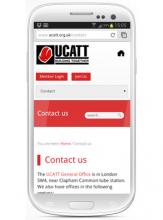
Every year the TUC holds an awards ceremony to recognise the achievements of affiliate unions in their communication efforts. The awards for 2014 have just been held, on Wednesday 9th July. The award categories include traditional media, like best magazine and best illustration, but I always keep an eye on the two technology categories: best use of e-communications and best website. UCATT nominated their new smartphone, widescreen and tablet friendly responsive website, which I'm proud to say I recently built with them, in the best website category. The judges chose it as the winner
23 Jan 2014

Apps vs responsive websites


“Should we develop an app or a mobile friendly website?” I’m increasingly coming across this question. It’s important to understand the pros and cons of each approach. Against a background of rapid growth in the use of smartphones and tablets, many organisations are unsure about the best way to target users on these devices. Apps are one obvious way to engage with this audience. However, HTML5, the latest version of the mark-up language that powers websites, has been pushing the growth in responsive website design, making more websites accessible to smartphone and tablets. Responsive design
15 Oct 2013

Which union websites work well on smartphones, tablets and widescreens?


I recently developed a new website for UCATT, the union for construction workers. Most of their members do not work at a desktop PC - so it was vital for the website to display well on smartphones. This is increasingly required for all websites, not just union sites. The biggest single change to website design over the last couple of years is driven by the increasing variety of screen sizes used to access them. Five years ago it was simple. A website would be designed to perform well at a fixed size that fitted well with the average desktop screen of the day. Now, people are using smartphones
30 Apr 2013

Got your web in the Cloud?


Cloud computing is a bit of a buzzword at the moment. Simply put, the ‘cloud’ refers to a service delivered across multiple machines on the internet rather than just the one server. Long seen as a technology that will be dominant in the future, cloud computing is becoming more mainstream. I recently had to get more hosting space for the websites I host on behalf of clients and I’ve decided to start using cloud hosting. So, what is cloud technology and why use it? Cloud computing is essentially the ability to employ a number of computers to serve your computing needs, remotely without actually